

Wakobo-ti-kodro – Jérémie Sansan Hien awarded at the CISFA 2026
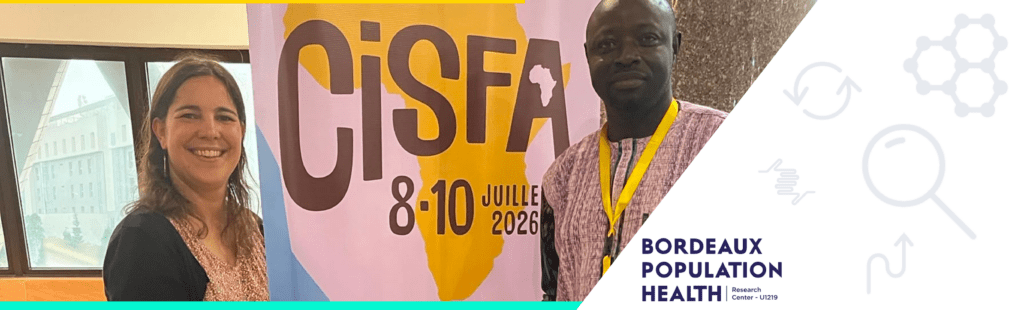
RetourFrom 6 to 10 July, Jérémie Sansan Hien, a PhD student in epidemiology, and Mélanie Plazy, a teaching researcher, both members of the GHiGS team, were in Cotonou, Benin, for the 1st International Congress on African Women’s Health (CISFA).
On this occasion, they presented the results of an evaluation of an innovative digital intervention involving the use of a tablet app by traditional birth attendants to monitor pregnancies in communities in the Central African Republic (the Wakobo-ti-kodro project).
Jérémie Hien was awarded third prize of the oral presentation.
The Wakobo-ti-kodro project is a pilot study which aims to evaluate a strategy designed to improve the identification of high-risk pregnancies within traditional communities in the Central African Republic. The innovation centres on a digital app made accessible to traditional midwives trained in traditional maternal healthcare.
This app has been tailored to its users, using pictograms and voice messages to identify high-risk pregnancies and warning signs in both the mother and the baby. Furthermore, the intervention strengthens the training of traditional midwives in community-based maternal healthcare, as well as their collaboration with health centres.
The first results presented at the International Congress on African Women’s Health (CISFA) are very encouraging:
during his oral presentation, Jérémie Hien, currently a PhD student working with Renaud Becquet and Cécile Cazes, demonstrated that this intervention helped to increase attendance at health centres by pregnant women and improve antenatal care right up to delivery.
Furthermore, Mélanie Plazy and Jérémie Hien presented the findings relating to the implementation of the intervention in the field during a plenary session. They demonstrated that this digital intervention was acceptable and feasible provided it was adapted to the local context: regular supervision of traditional birth attendants, the participation of community leaders, and planning for logistical constraints such as frequent power cuts.
This project was made possible thanks to a partnership between humanitarian workers from the emergency medical NGO ALIMA, the Central African Republic’s Ministry of Health and Population, the PACCI programme in Abidjan through PRISME-CI, and the Bordeaux Population Health Center.