

Depression and HIV in Senegal: interpersonal group therapy
RetourUnder the leadership of Dr Charlotte Bernard, in collaboration with Professor Moussa Seydi and his team at the SMIT at the Fann National University Hospital, the GHiGS team initiated, co-ordinated and supervised all the studies on depression amongst people living with HIV in Senegal. This work resulted in a report proposing a complete solution based on ‘TIP’ (Interpersonal Group Therapy)
Depression is a public health issue, it is one of the most common mental health disorders. It is estimated that one in five people worldwide has suffered or will suffer from a depressive episode during their life.
It’s a condition which, in addition to its impact on the individual, affects those around them and the community, and presents a significant risk of death by suicide.
In sub-Saharan Africa, it remains under-diagnosed. Among this population, people living with HIV are more prone to depression, which can affect the continuum of care and consequently increase the risk of mortality. Furthermore, there are symptoms common to both HIV and depression, making diagnosis complex (fatigue, sleep disturbances, changes in appetite).
In this context, the GHiGS team, led by Charlotte Bernard, initiated and co-ordinated all the studies to facilitate the management of depression in this population.
Between research, training and data collection, this work is the result of collaboration with local sites, including a partnership with Professor Moussa Seydi and his team from the Department of Infectious and Tropical Diseases at the Fann National University Hospital in Senegal, as part of the IeDEA West Africa collaboration: http://iedea-wa.org/.
These findings were used to write a report, intended for local institutions, setting out a complete solution, from raising awareness to treatment, including training for professionals, using content co-developed with stakeholders, validated and based on a therapy recommended by the WHO in resource-limited countries:
Interpersonal Group Therapy (TIP)
On this occasion, Dr Charlotte Bernard agreed to answer our questions.
What is interpersonal group therapy?
Interpersonal group therapy focuses on four interpersonal areas:
- conflict
- role transition
- bereavement
- social isolation
This includes:
- a pre-group session which enables each patient to identify the interpersonal area most closely linked to their depressive symptoms,
- and eight group sessions, at a rate of one session per week, in small groups of six patients.
During the first group session, members come together for an introductory session to get to know one another, as well as a reminder of the group’s rules.
Over the course of the following six sessions, patients take turns sharing their problems and experiences; there may be scenario-based exercises and role-plays, using specific techniques. Between sessions, each participant is encouraged to carry out tasks to help them make progress with their issues. The final session is devoted to a review of each participant’s progress and to preparing for the future, with a focus on identifying warning signs in the event of a relapse and the appropriate actions to pursue.
Whilst the strength of the group lies in sharing, peer recognition is also a major source of motivation, and a breeding ground for finding collective solutions to everyone’s problems. This form of therapy may not be suitable for everyone. Some people may not be comfortable in a group and are therefore referred to an individual alternative.
In Senegal, we have decided that only social workers and mediators should be trained and supervised to lead these therapy groups.
How do patients view this therapy?
“At first, the group can be a little scary. People worry about confidentiality, about meeting people they know from other contexts, and also question the effectiveness of psychotherapy:
‘Can simply talking really help me feel better?’ …
But after the first session, patients realise that the group’s cohesion is a driving force, and that confronting other people’s problems helps them to feel more secure and to put things into perspective. There is genuine sharing and mutual support. Some consider the other members like friends, or even family, and have continued to see each other after the therapy ended.”
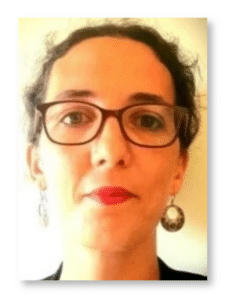 – Charlotte Bernard
Why is this approach appropriate for the country’s context?
As well as reducing symptoms of depression, the therapy has enabled them to improve their social lives, reconnect with their families, and even re-enter the workforce. Some have also reported greater engagement with their HIV care.
The therapeutic setting helps to overcome some of the barriers linked to beliefs, stigma and social norms, as well as time constraints within already overburdened services. The special bond between social workers/mediators and patients also helps to facilitate acceptance of treatment.
It is all the more remarkable when you know that people living with HIV are highly stigmatised in Senegal. More often than not, they live in hiding, rarely share their status, and use various strategies to protect what must remain secret (we have written about this (https://link.springer.com/article/10.1007/s10461-026-05150-1)
They may also be victims of violence, and they worry about the possibility of getting married, having children, losing their jobs and their social standing within their families, and so on…
Added to this stigma are several barriers, such as the lack of time allocated to testing in overburdened healthcare structures, as well as a lack of training for healthcare professionals and a lack of patient knowledge on the subject.
This context puts them at greater risk of developing depression.
However, this illness is not widely accepted either, given certain social and religious norms.
Psychiatrists tell us that their career choice has not always been well received by their families.
However, the role of mental health in society is beginning to change, following a growing awareness over the past two to three years. There is also a mental health division in Senegal with a strategic plan for 2024–2030.
But even though funds are lacking and the country suffers from an excessive concentration of healthcare services in the capital (https://journals.openedition.org/rfst/374). Here too, TIP offers an advantage.
The cost per patient for group TIP treatment is lower than that for treatment with antidepressants. This is because the therapy can be delivered by non-specialists (following training and supervision); it does not require medication but relies on patients taking action through discussions, sharing experiences and completing small exercises between sessions. Furthermore, the group setting helps to optimise access to care and the time spent by staff.
How can we scientifically evaluate the benefits of this type of therapy?
Our work is based on a review of the literature and an analysis of implementation, using both quantitative and qualitative approaches. We examined the parameters necessary to ensure the benefits, feasibility and acceptability of the therapy:
- Changes in the PHQ-9* score at the start, during and at the end of therapy, and 3 months later.
- Continuous monitoring of changes in suicidal ideation and the number of hospital admissions in cases of risk.
- Changes in daily functioning as measured by the WHODAS (WHO Disability Assessment Schedule (WHODAS 2.0)).
- Engagement in care, as measured by refusal rates, absence rates, drop-out rates and the course of therapy (duration of treatment, delays in sessions, waiting times before treatment, prescriptions for antidepressants, etc.). Furthermore, as mentioned earlier, we carried out a cost analysis which enabled us to identify the most significant areas of expenditure involved in setting up this programme. At an organisational level, the necessary tools were developed as part of the projects.
* The PHQ-9 is a test used to detect and assess the severity of depressive symptoms.
In order to improve the test’s sensitivity and reduce heterogeneity between sites, Dr Charlotte Bernard and her colleagues have been working on optimising this test. Drawing on data from other regions of sub-Saharan Africa, via the IeDEA collaboration, they have proposed a new algorithm that gives greater importance to mood-related symptoms.
What are the future possibilities?
The main priority at present is to formally integrate this depression management pathway into the care of people living with HIV. The tools for training, monitoring and evaluation are available. We have submitted two papers to international peer-reviewed journals on the evaluation of the training materials developed for healthcare professionals working in healthcare settings and the evaluation of awareness-raising materials for patients. We are now planning to propose this model to other sites participating in the IeDEA West Africa collaboration.
At the same time, we wish to extend our approach beyond HIV within the community and in primary care. We are currently preparing a publication on the enablers, barriers and needs for integrating care in these settings, and a second publication to present the adapted care pathway and the strategies required for its implementation, developed in collaboration with different stakeholders. As the year draws to a close, we are working on adapting the existing training programme for community workers, including video materials. In early 2027, we plan to validate this training programme and jointly develop the awareness-raising campaign that will complement the care pathway, a step considered key by those working on the ground.